Waterproofing certificates in NSW: a practical guide
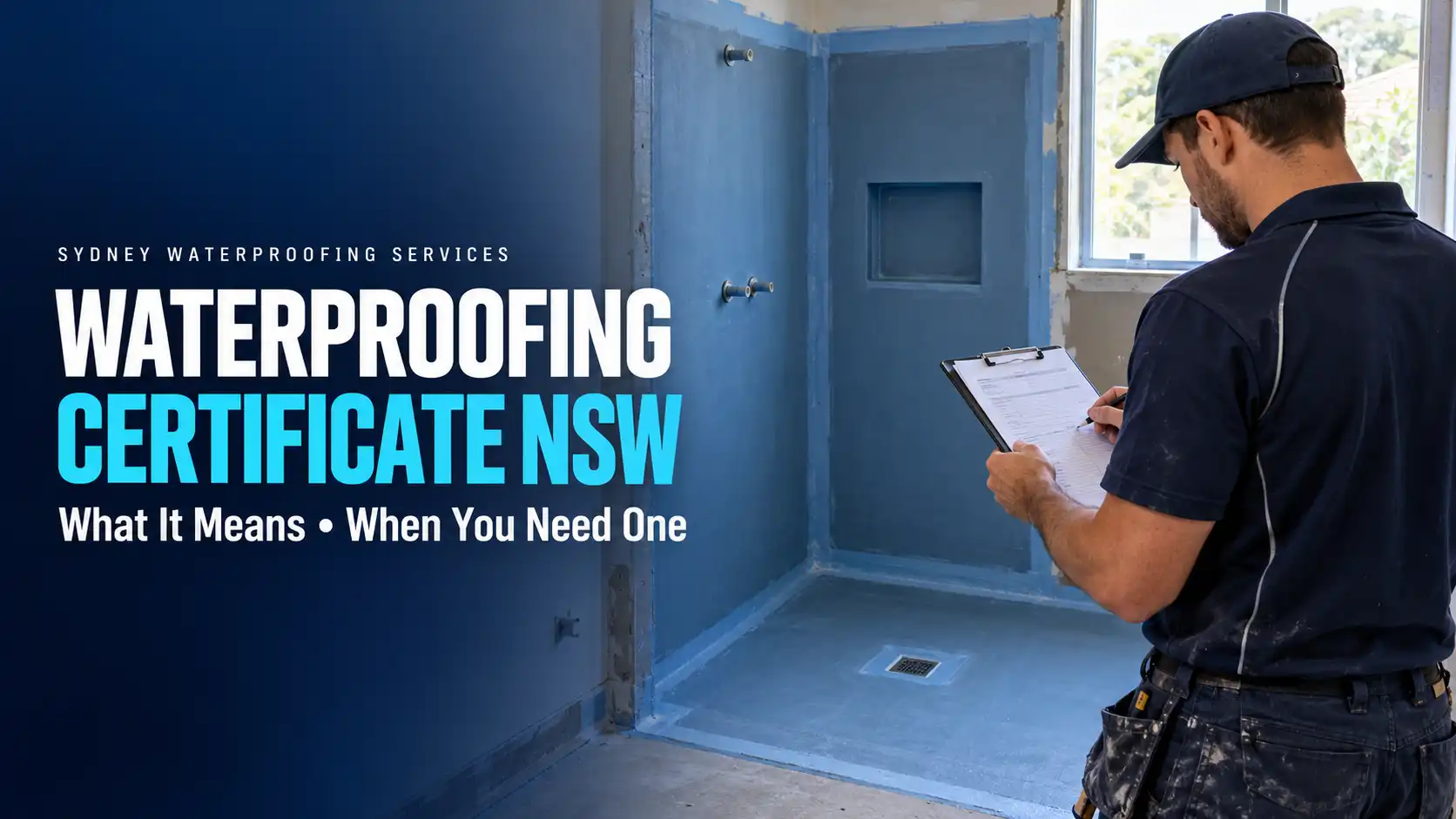
When a builder, certifier, strata manager, or buyer’s solicitor asks for a “waterproofing certificate,” they usually mean written confirmation from the licensed waterproofer who did the work that the membrane installation was completed to the relevant standard and product requirements. In NSW there is no single government-issued waterproofing certificate form that every contractor fills in the same way. The document comes from the trade — which is why the quality of that paperwork varies wildly.
This article is practical guidance for homeowners, renovators, and strata committees in Sydney. It is not legal advice. For formal compliance questions on your project, speak with your certifier, solicitor, or building consultant.
Sydney Waterproofing Services provides certificates on completed waterproofing scopes we install. Licence 389766C. ABN 81 656 401 455. Based at Factory 29, 6 Abbott Road, Seven Hills NSW 2147. 1300 949 191.
What a waterproofing certificate actually is
A waterproofing certificate (sometimes called a certificate of compliance for waterproofing, or a waterproofing compliance certificate) is a trade document. It typically states:
- Who did the work (company / licence details)
- Where the work was done (property address and specific areas)
- What system was installed (membrane product / manufacturer)
- That the installation was carried out in line with the nominated standard and manufacturer instructions
- Date of completion and sign-off
It is not:
- A council “permit”
- Something a tiler or plumber can issue unless they personally hold the right waterproofing licence and did the membrane work
- A guarantee that the building will never leak if someone later drills through the membrane or changes falls
- Automatic proof that every other trade on site did their job correctly
Private certifiers and builders often treat the waterproofer’s certificate as part of the evidence pack for wet-area sign-off. Strata managers file it against the lot or common-property works. Conveyancers may ask for it on sale if renovations were recent.
When you usually need one
Common triggers in Sydney:
- Bathroom, ensuite, laundry or kitchen wet-area renovations where waterproofing is required under the National Construction Code (NCC) pathway and Australian Standard practice for domestic wet areas
- New builds and major alterations where the builder’s certifier asks for trade certificates before occupation or final
- Strata lot renovations — many OCs require evidence that wet-area work was done by a licensed waterproofer
- Insurance or defect claims after a leak — having (or not having) paperwork affects the argument
- Sale of property — buyers and their advisors increasingly ask what was done behind the tiles
External balconies and rooftops may sit under different specification paths (including AS 4654 for waterproofing membranes on external above-ground areas, depending on the project). The principle is the same: the installer should leave clear records of what was installed and how it was tested.
If you’re unsure whether your job needs a certificate, ask the waterproofer before tiles go down — and ask your builder or certifier the same question. Fixing paperwork after finishes are complete is harder than doing it in sequence.
AS 3740 and wet areas (plain English)
AS 3740 is the Australian Standard for waterproofing of domestic wet areas. In house work under NCC 2022, wet-area compliance can follow pathways that use the Housing Provisions and/or AS 3740 (use the edition referenced by the NCC for your project — AS 3740:2021 is the edition widely referenced with NCC 2022).
In trades terms, AS 3740-type practice is about where water must be controlled and how junctions are detailed: shower areas, floors that need waterproofing or water resistance, wall heights, bath junctions, bond breakers, penetrations, and falls to wastes.
A certificate that simply says “waterproofed OK” without naming the area, product, or standard is weak evidence. A certificate that references the wet areas completed and the system used is what builders and certifiers expect to see.
For external decks and balconies, project specs often point to AS 4654 (waterproofing membranes for external above-ground use) and the manufacturer’s installation manual. Don’t assume a bathroom liquid membrane is automatically the right external system.
Who is allowed to do the work (and sign)
In NSW, waterproofing work is regulated. For residential building work above the Fair Trading contract threshold, you generally need an appropriately licensed contractor. Waterproofing sits in its own licence category — check the licence on the NSW Fair Trading public register.
Points that catch people out:
- The certificate should come from the licensed waterproofer who installed the membrane, not from a friend who “supervised.”
- A builder can only issue it if they (or their licensed entity) actually hold the waterproofing licence category and performed the waterproofing.
- Tilers and painters are not waterproofers by default.
- Company licences matter when you contract a company — match the contracting entity to the paperwork.
Sydney Waterproofing Services Pty Ltd holds NSW contractor licence 389766C. Always verify current licence status on the Fair Trading register for any contractor you engage.
What good paperwork includes
There is no single mandatory template, but a useful pack usually includes most of the following:
- Contractor details — legal name, trading name, ABN, NSW licence number
- Property address and clear description of areas waterproofed (e.g. “main bathroom floor and shower, ensuite shower walls to X height”)
- Date(s) of waterproofing completion
- Membrane system — product name(s), manufacturer, and coat/system notes where relevant
- Reference to compliance — e.g. installed in accordance with AS 3740 (wet areas) and/or manufacturer data sheets; external works referenced to the applicable standard/spec
- Flood test / water test record — duration and result where the area was tested before tiling
- Photographs of the completed membrane before tiling (corners, wastes, upturns, penetrations)
- Signature of the responsible person and date
- Warranty terms — what is covered, for how long, and what voids cover (penetrations, misuse, lack of maintenance)
If a quote is hundreds cheaper and includes “no certificate, no photos, no test,” you know what you’re buying.
Owner, builder, and strata roles
Homeowner / lot owner Engage a licensed waterproofer (or ensure your builder does). Keep the certificate and photos with your renovation file. For strata lots, check by-laws and applications before stripping a bathroom — lot vs common property boundaries matter.
Builder Coordinate sequence: substrate ready → waterproofing → cure → test → certificate/photos → tiling. Don’t pressure the waterproofer to sign off unfinished detailing. Don’t let tiling start early.
Certifier May request trade evidence as part of inspections and final documentation. They don’t usually “issue” the waterproofing certificate themselves.
Strata / OC / building manager For common-property waterproofing (many balconies, podiums, rooftops), the OC typically owns the asset and the records. For lot wet areas, the OC may still require evidence before approving a renovation. Keep certificates in the building’s records where works affect common property or future claims.
More on balcony programmes: strata balcony waterproofing and strata waterproofing.
Timing: certificate before tiles
Best practice is to complete membrane work, allow cure times per the manufacturer, perform any required flood test, record photos, and issue the certificate before tiling or other finishes cover the membrane. Once tiles are down, nobody can see whether upturns and corners were done correctly without destructive investigation.
If your tiler is booked for tomorrow and the membrane was only applied this morning, stop and check cure times. Rushing that gap is a common cause of early failure — certificate or not.
Red flags
- Cash job, no licence number on paperwork
- Certificate signed by someone who wasn’t on site
- No product name, no photos, no test
- “Lifetime for the whole house” with no area list
- Pressure to tile immediately with no cure window
- Reluctance to put exclusions and warranty limits in writing
How SWS handles certificates on completed scopes
On waterproofing works we complete, we aim to leave you with clear area descriptions, system details, licence identification, and supporting photos/tests as appropriate to the job. Ask for certificate inclusions when you request a quote — especially for bathroom renovations headed to a certifier or strata approval.
Related reading: bathroom waterproofing, remedial waterproofing, and waterproofing cost Sydney 2026 if you’re budgeting the works that sit behind the paperwork.
Get compliant wet-area or remedial work quoted
Call 1300 949 191, email info@sydwaterproofingservices.com.au, or use the contact form. Tell us the suburb, the wet area or external area involved, and whether a builder or strata manager needs documents for sign-off.
Sydney Waterproofing Services · Seven Hills · Monday–Saturday 7am–6pm. Again: this guide is general information, not legal advice.