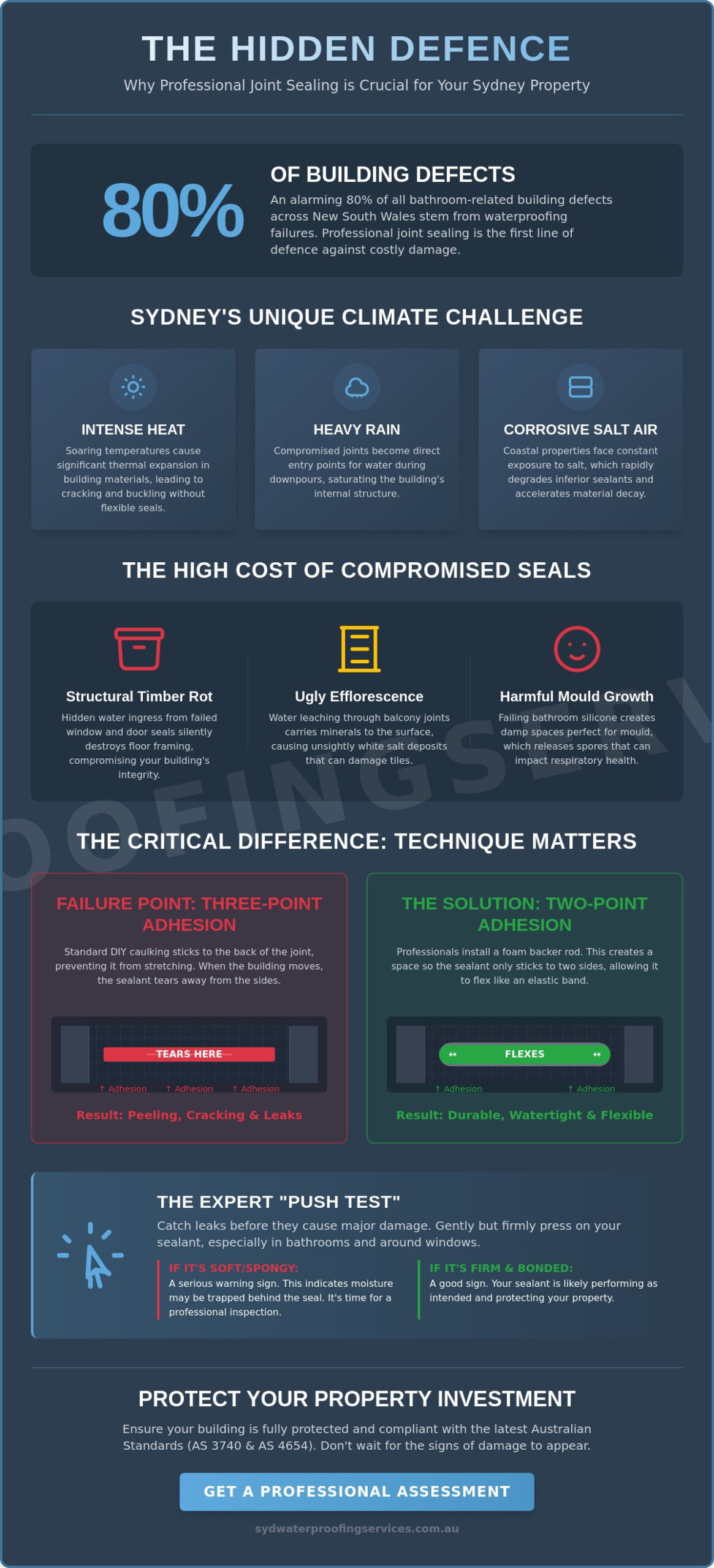
Did you know that waterproofing failures account for approximately 80% of bathroom-related building defects across New South Wales? While it often looks like a simple finishing touch, professional joint sealing sydney is actually the critical defensive bridge between your structural waterproofing membrane and your visible tiles. If this bridge fails, your entire protection system collapses, leading to the recurring leaks and mouldy, peeling silicone that plague so many local properties.
We understand the frustration of watching a “quick fix” fail, leaving you worried about hidden structural damage and mounting remedial bills. You deserve a leak-free home with professional finishes that stand the test of time. This guide will show you how expert joint sealing protects your assets from water ingress and structural movement while ensuring full compliance with the latest Australian Standards.
We will break down the 2026 updates to AS 3740 and AS 4654, explain why specific materials are required for the local climate, and provide a clear roadmap to achieving a permanent, watertight seal for your property.
Key Takeaways
- Understand why professional joint sealing sydney is essential for managing structural movement and preventing the “Three-Point Adhesion” failures that cause standard caulking to peel.
- Learn the critical distinctions between expansion and control joints to ensure every gap in your property serves its protective purpose.
- Discover why Sydney’s specific environmental conditions, including high humidity and thermal shifts, require high-performance materials rather than DIY alternatives.
- Identify the early warning signs of sealant degradation using the expert “push test” to catch leaks before they compromise your building’s integrity.
- Gain peace of mind by ensuring your property complies with the latest 2026 Australian Standards for internal and external waterproofing.
Joint Sealing Sydney: The Critical Defence for Your Property
Professional joint sealing sydney is more than a cosmetic finish; it’s a fundamental component of structural preservation. At its core, joint sealing involves the precise application of specialised, flexible sealants to the gaps between various building components. This process creates a watertight and airtight barrier that accommodates the inevitable movement of a building. While many homeowners mistake this for basic “caulking” found in a hardware store, professional-grade remedial joint sealing utilises high-performance polymers designed to withstand significant mechanical stress. Understanding Different Joint Types is essential for any property owner, as the sealant must be matched to the specific movement characteristics of the substrate to avoid premature failure.
The distinction between standard caulking and professional joint sealing lies in the material chemistry and the application technique. Standard retail products often lack the elasticity required to handle the long-term expansion and contraction of heavy construction materials. In contrast, remedial joint sealing involves removing failed materials, cleaning the joint surfaces to a professional standard, and applying a primer before the final sealant is installed. This ensures a bond that remains intact for years, shielding the property from the elements and maintaining its market value.
Why Joint Sealing is Vital in the Sydney Climate
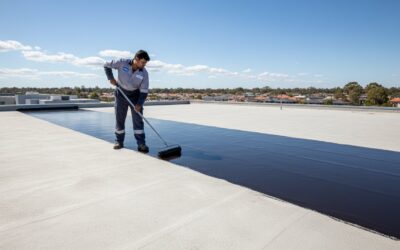
Sydney presents a unique set of environmental challenges that test the limits of building materials. In Western Sydney, particularly around areas like Seven Hills, summer temperatures frequently soar. This intense heat causes significant thermal expansion in concrete slabs and masonry. Without high-quality joint sealing sydney, these materials would press against each other, leading to cracking or buckling. Conversely, coastal Sydney properties face the corrosive effects of salt air, which can degrade inferior sealants rapidly. When heavy rain events hit, any compromised joint becomes a direct entry point for water, bypassing your primary defences and saturating the internal structure. Properties with flat or low-pitch roofs are especially vulnerable, making a comprehensive rooftop waterproofing sydney system an essential complement to quality joint sealing across the entire building envelope.
The Consequences of Compromised Seals
Ignoring a failing seal is a high-risk gamble with your property’s value. Once water ingress begins, the damage is often hidden until it becomes a costly emergency. We see several common issues when seals are neglected:
- Internal Timber Rot: Water seeping through failed window or door seals often settles in the floor framing. This leads to structural rot that is difficult to detect until the timber’s integrity is gone.
- Efflorescence: On balconies and terraces, failed joints allow water to leach minerals from the bedding and grout. This results in unsightly white salt deposits known as efflorescence, which can damage tile surfaces.
- Health Risks: Mould growth behind failing bathroom silicone isn’t just an aesthetic issue. It releases spores into the air that can impact respiratory health for everyone in the building.
Maintaining structural integrity requires a proactive approach. By ensuring your seals are professionally applied and regularly inspected, you defend your asset against the most common causes of building decay and avoid the need for expensive remedial waterproofing later.
Understanding Different Joint Types: From Expansion to Aesthetics
Effective structural protection requires more than a one-size-fits-all approach. Every building features a variety of gaps and junctions, each serving a distinct purpose and requiring a specific material solution. Whether it’s a high-rise facade or a residential bathroom, the success of joint sealing sydney depends on identifying the mechanical demands of the joint before the first bead of sealant is ever laid. Using the wrong product or technique in a high-movement area is a guaranteed path to structural failure and water ingress.
Expansion and Movement Joints
Buildings are dynamic structures that expand and contract due to thermal changes and settlement. Expansion joints are intentional gaps that allow the building to “breathe” without the risk of masonry cracking or tile tenting. To manage this movement, we employ specialist joint sealing techniques that prioritise “two-point adhesion.” By installing a foam backing rod into the joint, we ensure the sealant only bonds to the two parallel sides. This allows the material to stretch and compress freely. Without this rod, the sealant bonds to the back of the joint, causing it to tear under tension. This is particularly critical for high-traffic walkways and driveways where mechanical loads are constant.
Silicone Sealing for Wet Areas
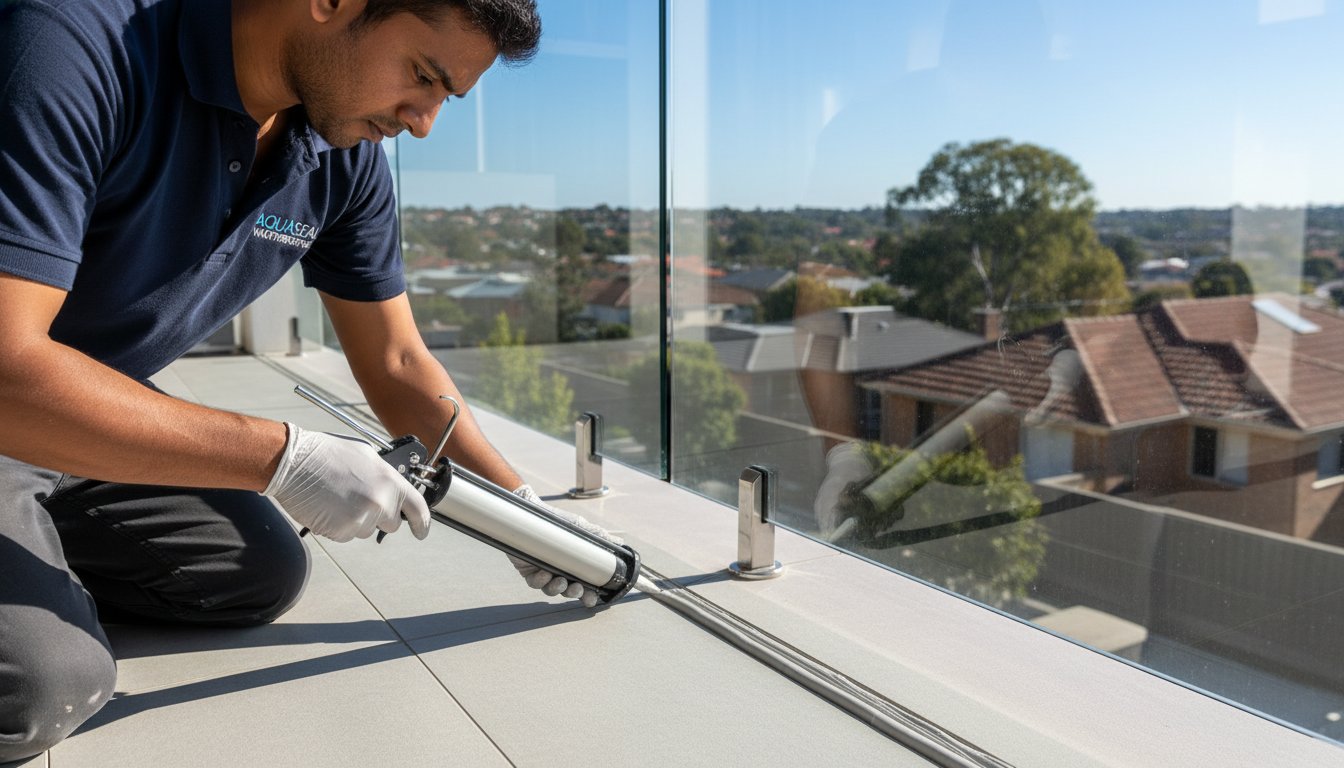
In internal wet areas like bathrooms and laundries, perimeter sealing acts as the final barrier against moisture. We utilise premium anti-fungal silicones that are specifically formulated to resist mould colonisation in Sydney’s humid conditions. A common cause of failure in these areas is applying new silicone over old, mouldy residue. This prevents a proper chemical bond and allows water to seep behind the tiles. Achieving a professional finish also requires precise colour-matching to the grout or tile, ensuring the seal is as aesthetically pleasing as it is functional. If you’ve noticed peeling or discolouration, our professional joint sealing services can restore both the look and the integrity of your wet areas.
Construction and Facade Sealing
For multi-storey developments and commercial assets, the building envelope must withstand extreme environmental stress. Facade sealing typically requires heavy-duty polyurethane or hybrid sealants that offer superior UV resistance. Sydney’s north-facing facades endure intense solar radiation, which can cause inferior products to become brittle and crack within months. Furthermore, commercial properties often require fire-rated sealing. These specialised materials are designed to prevent the spread of smoke and flames through structural gaps, ensuring the building meets mandatory safety and compliance standards.
Why Specialist Joint Sealing Outperforms Standard Caulking
Professional joint sealing sydney requires a level of technical precision that far exceeds what a DIY approach or a general handyman can offer. While it is tempting to view sealant application as a minor cosmetic task, it is actually a high-stakes engineering requirement. One of the most common causes of failure we see is “Three-Point Adhesion.” For a joint to function correctly, the sealant must only bond to the two parallel sides of the gap. If it also adheres to the back of the joint, it loses its ability to stretch. This leads to cohesive failure, where the material tears under the slightest structural movement, rendering the seal useless.
Chemical compatibility is another critical factor often overlooked by non-specialists. Not all sealants play well with every waterproofing membrane. Applying a silicone-based product over certain polyurethane membranes can prevent a proper chemical bond, leaving your property vulnerable. In the intense Sydney humidity, surface preparation is non-negotiable. We use specific primers to ensure the sealant bites into the substrate, creating a permanent, watertight barrier that resists the city’s coastal salt and heat. This level of detail is what separates a long-term solution from a temporary fix.
The Waterproofing Connection
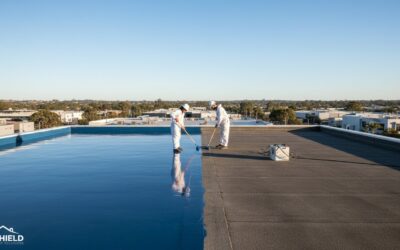
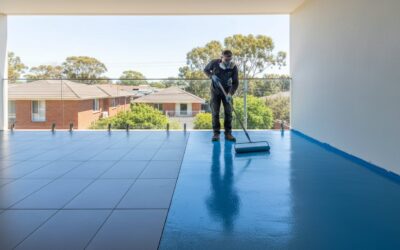
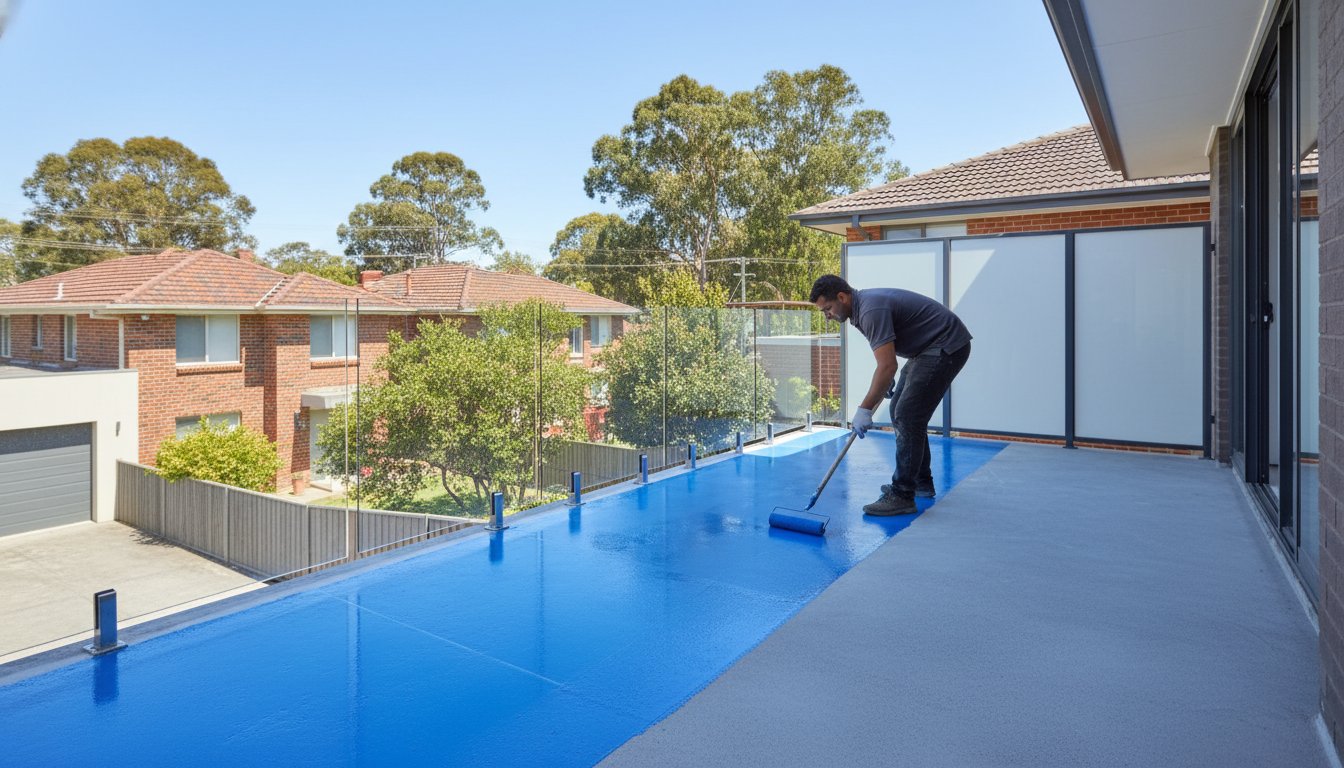
A professional seal acts as the vital first line of defence for your underlying balcony waterproofing system. The joint sealant protects the bond breaker, which is the flexible tape or backing that allows the membrane to move independently of the structure. If the external seal fails, water can bypass the visible surface and begin to degrade the membrane’s edges. Often, what looks like a minor leak in the silicone is actually a sign that the waterproofing bond breaker has been compromised. This requires immediate professional intervention to prevent total system failure and structural rot. The same principle applies above — a compromised rooftop waterproofing sydney membrane can accelerate joint failure throughout the entire structure by allowing water to track down into walls and perimeter junctions.
Remedial Rectification: Fixing “Cowboy” Jobs
Rectifying a failed installation is significantly more complex than the initial application. We frequently encounter “capping,” where a previous contractor has simply applied a new layer of silicone over old, degraded material. This never works. The new layer cannot bond to the old, mouldy residue, and the underlying rot continues unabated. Our remedial process involves the total mechanical removal of all existing sealants. We then use professional-grade, high-evaporation solvents to sterilise the bonding surface. This ensures that the new installation achieves 100% adhesion, providing a definitive shield against future water ingress and ensuring your property remains compliant with Australian Standards.
Warning Signs: When to Call a Sydney Joint Sealing Expert
Detecting a sealant failure before it becomes a structural emergency requires a vigilant approach. Many property owners wait until they see a visible flood or a major crack; however, the most dangerous failures often begin as subtle changes in the material’s texture or appearance. Professional joint sealing sydney is designed to be a proactive shield. By the time water is dripping from a ceiling or a balcony slab, the underlying timber or steel reinforcement has likely already begun to degrade. Identifying these warning signs early is the only way to avoid the high costs associated with structural remediation.
One of the most effective ways to check the health of your seals is the “push test.” Use a blunt object, such as the end of a pen, to gently press into the sealant. High-quality, functional sealant should feel elastic and immediately return to its original shape. If the material feels brittle, hard, or leaves a permanent indentation, the chemical polymers have broken down. This loss of elasticity means the joint can no longer accommodate structural movement, leading to invisible gaps where water can penetrate. Other hidden indicators include a persistent damp smell in bathrooms or peeling paint on the ceiling of the room directly below a wet area.
For Sydney strata managers, the stakes are even higher. Regular audits of expansion joints and facade seals are essential for maintaining building compliance and insurance validity. Neglecting these small components can lead to collective liability for the owners’ corporation if water ingress causes common property damage. Establishing a routine inspection schedule ensures that minor wear is addressed before it compromises the building’s integrity.
Identifying Failure in Wet Areas and Balconies
In high-use zones like showers and laundries, look closely at the corners. If you notice “tearing” where the silicone meets the tile, the bond has failed. Discolouration or black mould that cannot be scrubbed off is another definitive sign; this indicates that moisture is trapped behind the sealant, creating a breeding ground for bacteria. On external balconies, check the perimeter seals for any signs of shrinking or pulling away from the wall. These gaps are direct pathways for water to reach the substrate, often necessitating remedial waterproofing to fix the resulting internal damage.
The Cost of Neglect
The financial argument for proactive maintenance is undeniable. A professional joint sealing intervention for a standard balcony might cost a few hundred dollars, yet it serves as the primary defence against a total system failure. If water ingress is allowed to rot the structural floor joists or cause concrete cancer, a full balcony rebuild can easily exceed A$20,000. Beyond the repair costs, failed joints can lead to the rejection of insurance claims if the damage is deemed a result of poor maintenance. Investing A$500 in expert sealing today is the most cost-effective way to protect your asset’s long-term value.
If you have identified any of these warning signs, contact our specialist team for a professional assessment of your property’s joint integrity.
Professional Joint Sealing Services in Sydney and Seven Hills
Sydney Waterproofing Services provides the definitive shield your property needs against the elements. Based in Seven Hills, our team specialises in high-performance joint sealing sydney, catering to both residential renovations and large-scale commercial developments. We understand that a joint is only as good as the technician applying it. By combining our deep expertise in tiling services and waterproofing, we deliver a finish that is structurally sound and visually flawless. Every project we undertake is executed with a commitment to long-term durability and strict adherence to Australian Standards.
Our approach is methodical. We don’t believe in shortcuts or “quick fixes” that fail after a single season of Sydney’s unpredictable weather. Instead, we focus on the total restoration of the joint’s integrity. This ensures your property remains leak-free, protecting your investment from the costly remedial repairs discussed earlier in this guide. Whether you are managing a strata complex or updating a family home, our work provides the peace of mind that comes from knowing your building’s “defensive bridge” is secure.
Our Proven Sealing Process
We follow a disciplined three-stage process to ensure every seal meets our rigorous internal benchmarks. This consistency is why Sydney property owners trust us with their most sensitive structural joints.
- Initial Assessment: We begin by analysing the specific type of joint and the extent of any existing damage. This includes measuring expected movement and identifying the root cause of previous failures.
- Material Selection: No single product fits every scenario. We select from premium high-performance sealants, including Silicone, Polyurethane (PU), or MS Polymers, based on the substrate and environmental exposure.
- Precision Application: Our certified technicians apply the sealant with surgical precision. We prioritise correct joint geometry and clean lines to ensure a professional, long-lasting result.
Why Choose a Local Seven Hills Specialist?
Western Sydney’s unique geography presents specific challenges for building maintenance. The reactive clay soils common in the region can lead to significant soil movement, which puts immense stress on structural joints. As a local specialist, we have a deep understanding of these conditions and how they affect property longevity. Our proximity allows us to provide prompt, reliable service to clients across the Greater Sydney area, ensuring that warning signs are addressed before they escalate into emergencies.
Sydney Waterproofing Services is a fully licensed and insured Australian proprietary company that has been operating since 2016. We take our responsibility as your building’s guardian seriously, delivering results that reflect our years of industry experience and professional integrity.
Protect your property today, Contact Sydney Waterproofing Services for a joint sealing quote.
Secure Your Property with Expert Joint Sealing
Maintaining the integrity of your building’s gaps and junctions is a non-negotiable aspect of responsible property ownership. We’ve explored how professional joint sealing sydney serves as the essential defensive bridge between your structural waterproofing and the harsh Australian climate. By identifying warning signs like material brittleness or mould colonisation early, you can prevent the catastrophic structural rot that often follows neglected seals.
Since 2016, Sydney Waterproofing Services has operated as a trusted guardian for residential and commercial assets across the Greater Sydney region. As certified waterproofing specialists based in Seven Hills, we provide expert remedial and joint sealing solutions that prioritise long-term durability and total compliance with Australian Standards. Don’t leave your structural safety to chance or inferior products that fail when the heat rises.
Get a Professional Joint Sealing Quote from Sydney Waterproofing Services
Taking proactive steps today ensures a leak-free, high-value property for years to come. We look forward to helping you defend your asset.
Frequently Asked Questions
How often should I replace the joint sealing in my Sydney home?
Most high-performance sealants last between five and ten years, though this lifespan varies based on UV exposure and proximity to the coast. In areas like Seven Hills where thermal expansion is high, you should inspect your joints annually. Proactive replacement is a small investment that prevents the structural decay often caused by aged, brittle materials.
Can I apply new silicone over the old sealant in my bathroom?
You cannot apply new silicone over old sealant because the new material won’t achieve a chemical bond with the degraded surface. This practice, often called “capping”, is a primary cause of recurring leaks and mould growth. A professional joint sealing sydney service involves the total mechanical removal of old residue to ensure a sterile, high-adhesion surface for the new seal.
What is the difference between caulking and joint sealing?
The main difference lies in the material’s elasticity and intended use. Caulking is typically a rigid filler for static gaps, whereas professional joint sealing uses high-performance elastomeric compounds designed to stretch and compress. These specialised materials allow your building to move without the seal tearing or pulling away from the substrate.
How long does professional joint sealing take to cure in Sydney humidity?
Professional-grade sealants generally take 24 to 48 hours to cure fully, depending on the specific product and the ambient humidity levels. While the material usually develops a “skin” within an hour, it’s vital to avoid using wet areas or walking on expansion joints during the first full day. This ensures the bond reaches its maximum structural strength.
Why is the silicone in my shower turning black so quickly?
Silicone turns black when mould colonises the material, usually because the bond between the sealant and the tile has failed. Once a gap opens, moisture becomes trapped behind the bead, creating a breeding ground for bacteria that cannot be scrubbed away. Using premium anti-fungal sealants and ensuring a perfect bond are the only ways to prevent this discolouration.
Does joint sealing come with a warranty or certificate of compliance?
Professional joint sealing for wet areas must adhere to Australian Standards AS 3740 and AS 4654. While minor repairs may not always require a certificate, any waterproofing or related work valued over A$5,000 in NSW must be completed by a licensed contractor. We provide the necessary documentation to ensure your property remains compliant with building regulations and insurance requirements.
Is joint sealing necessary for outdoor tiles and pavers?
Yes, joint sealing is essential for outdoor areas to manage the extreme thermal expansion caused by the Sydney sun. Without flexible expansion joints, tiles and pavers will eventually crack or lift as they press against walls and other rigid structures. Sealing these gaps also prevents water from saturating the bedding layer, which protects against efflorescence and salt damage.
How do I know if my leaking balcony is a joint issue or a membrane failure?
A leak at the perimeter or where the floor meets the wall is often a joint issue, while water appearing through the centre of the ceiling below typically indicates a membrane breach. However, water often travels along structural paths, making the true source difficult to spot. A professional diagnostic inspection is the most reliable way to determine if you need a simple joint refresh or more extensive remedial waterproofing.