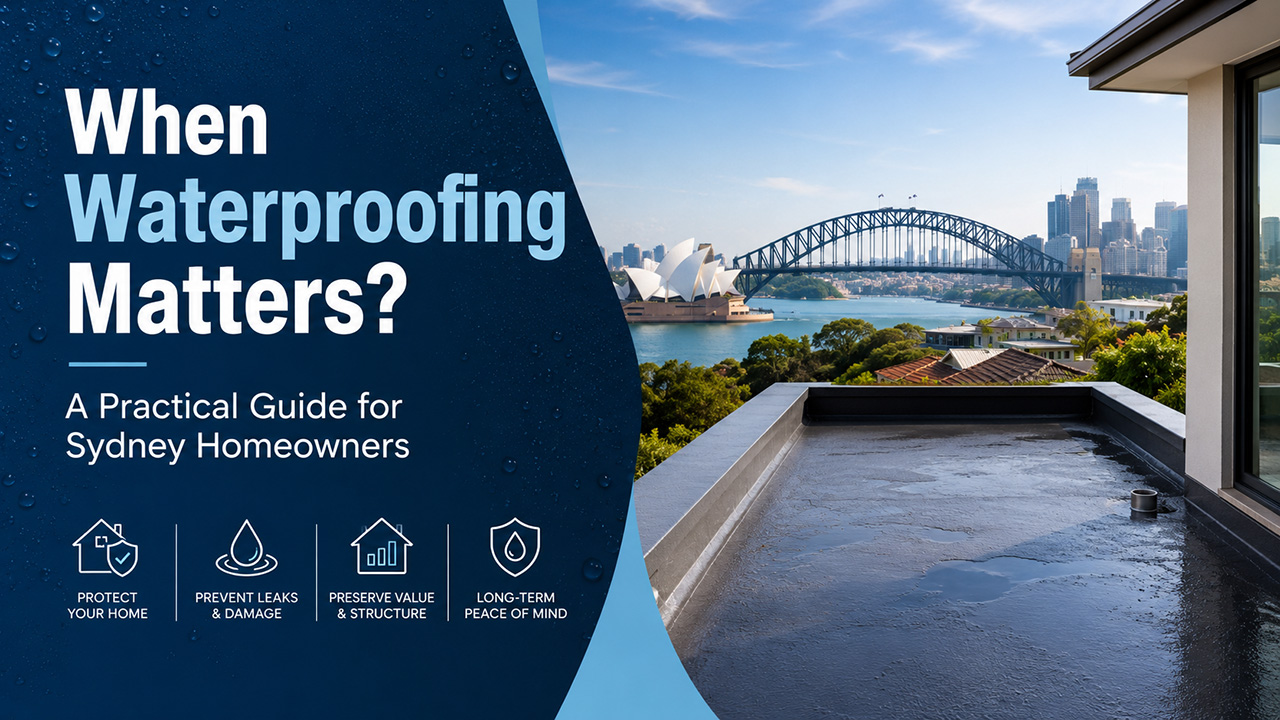
Most Sydney homeowners don’t think about waterproofing until something goes wrong — a ceiling stain that keeps spreading, tiles that start lifting in the shower, or a balcony that smells damp after every storm. By the time those signs appear, water has often been infiltrating your property for months. The damage is already compounding.
Sydney’s climate doesn’t forgive neglect. With coastal humidity, summer downpours, and temperature swings that stress building materials year-round, waterproofing isn’t a one-off checkbox on your renovation list. It’s an ongoing layer of protection that determines how long your property holds its value — and how much you’ll spend fixing it down the track.
This guide gives you a practical framework for understanding when waterproofing matters, what to look for, and what good professional waterproofing actually looks like in Sydney homes today.
Key Takeaways
-
Water damage is rarely visible until it’s already structural — learn the early warning signs before repairs become expensive.
-
Sydney’s climate creates specific waterproofing risks that differ from other Australian cities, particularly for balconies, bathrooms, and rooftops.
-
Different areas of your property require different waterproofing methods — there is no one-size-fits-all solution.
-
Proactive maintenance is significantly cheaper than remedial repair — understand the difference and when each applies.
- Sydney Waterproofing Services has been protecting Sydney properties since 2016 with fully qualified tradespeople, industry memberships, and a satisfaction guarantee.
Table of Contents
- Why Waterproofing Is a Priority Issue for Sydney Properties
- The Warning Signs: How to Spot a Waterproofing Problem
- Where Waterproofing Matters Most: Room by Room
- Proactive Maintenance vs Remedial Repair: Knowing the Difference
- How Sydney Waterproofing Services Approaches Every Job
- Why Sydney Homeowners Trust Sydney Waterproofing Services
Why Waterproofing Is a Priority Issue for Sydney
Properties
Sydney is not a forgiving environment for poorly maintained buildings. The combination of coastal salt air, high seasonal rainfall, and significant heat variation puts constant stress on membranes, sealants, grout lines, and structural joints. What holds up fine in a dry inland climate may fail within a few years here.
There’s also the density factor. Many Sydney properties — particularly apartments, terraces, and semi-detached homes — share walls, floors, and drainage systems. A waterproofing failure in one unit doesn’t stay in one unit. Water travels, and it travels fast through concrete and cavity walls. What starts as a neighbour’s leaking shower can become your mould problem.
The True Cost of Ignoring Water Damage
Cosmetic water damage is the visible end of a much deeper problem. A stained ceiling or discoloured grout line might cost a few hundred dollars to patch. The structural damage it represents — compromised substrate, degraded membrane, saturated insulation, or corroding reinforcing steel — can cost tens of thousands to address properly.
Australian building codes require waterproofing for wet areas under AS 3740, and for good reason. Properties that don’t meet this standard aren’t just uncomfortable to live in; they carry real liability for owners and significant risk for buyers. A failed waterproofing system identified during a pre-purchase inspection can kill a sale or dramatically reduce a property’s value.
Sydney’s Climate Demands a Higher Standard
In wetter Sydney suburbs — the Hills District, the Northern Beaches, and areas near creeks and catchments — roof and balcony waterproofing failures are among the most common building defects reported. These areas receive above-average annual rainfall and are subject to severe storm events that overwhelm gutters and drainage systems quickly. The pressure on horizontal surfaces like rooftops, balconies, and planter boxes is considerably higher than most homeowners realise.
The Warning Signs: How to Spot a Waterproofing Problem
The challenge with water damage is that it tends to hide. Membranes fail gradually, grout degrades slowly, and sealants around fixtures crack without obvious drama. By the time you notice something, the problem behind the wall has been developing for a while.
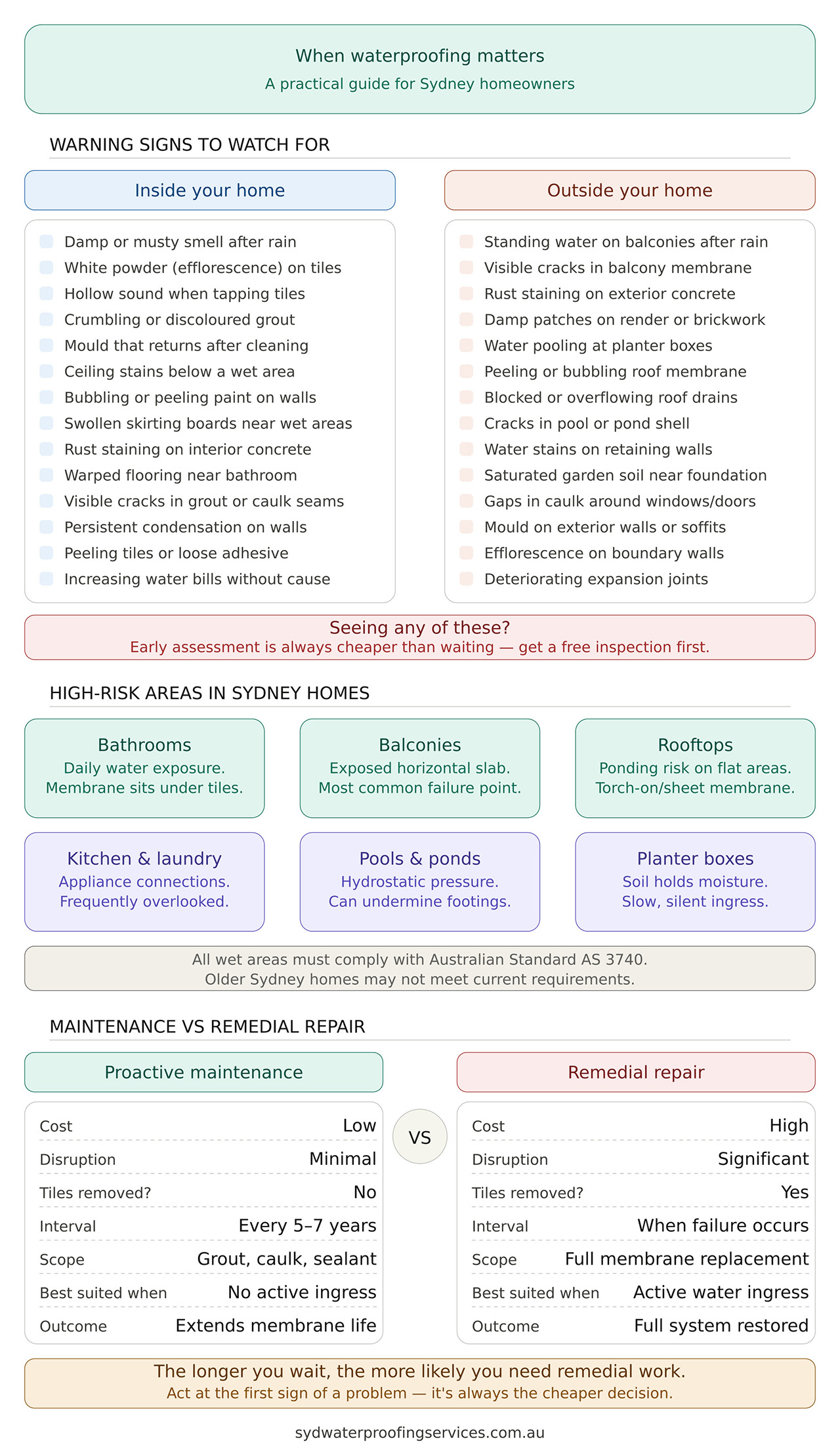
Here are the key indicators that your waterproofing may have failed or is close to failing:
Inside the home:
- Damp or musty smell in bathrooms, laundries, or near external walls after rain
- Efflorescence (white powdery residue) on tiles, grout lines, or concrete surfaces
- Tiles that sound hollow when tapped — a sign the substrate beneath has deteriorated
- Grout that is crumbling, discoloured, or pulling away from tile edges
- Mould growth that returns quickly after cleaning
- Ceiling stains or bubbling paint directly below a bathroom or balcony above
- Swollen or warped skirting boards adjacent to wet areas
Outside the home:
- Standing water on balconies or flat rooftops after rain
- Visible cracks in balcony or rooftop membranes
- Rust staining on concrete surfaces (indicates corroding steel reinforcement)
- Damp patches on external render or brickwork that don’t dry out
- Water pooling near the base of planter boxes or retaining walls
If you’re seeing any combination of these signs, the problem is unlikely to resolve on its own. Early assessment is always cheaper than waiting.
Where Waterproofing Matters Most: Room by Room
Different parts of your property carry different waterproofing risks. Understanding which areas are most vulnerable — and why — helps you prioritise inspections and maintenance correctly.
Bathrooms and Showers
The bathroom is the highest-risk wet area in any home. Shower recesses, bath surrounds, and the floor-to-wall junctions are subject to daily water exposure. Under AS 3740, these areas require a continuous waterproofing membrane applied to specific heights — but older Sydney homes were often built before these standards were tightened, and many have never been properly upgraded.
Shower failures are particularly common because the membrane sits beneath the tiles and is invisible. A hairline crack in the substrate or a failed bond at a corner joint can allow water to migrate undetected for months. By the time tiles start moving or the ceiling below shows moisture, the underlying structure is already compromised.
Balconies and Terraces
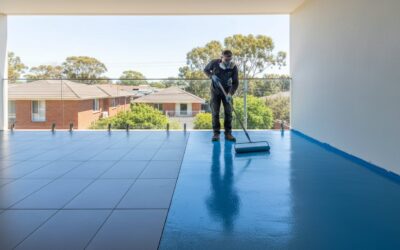
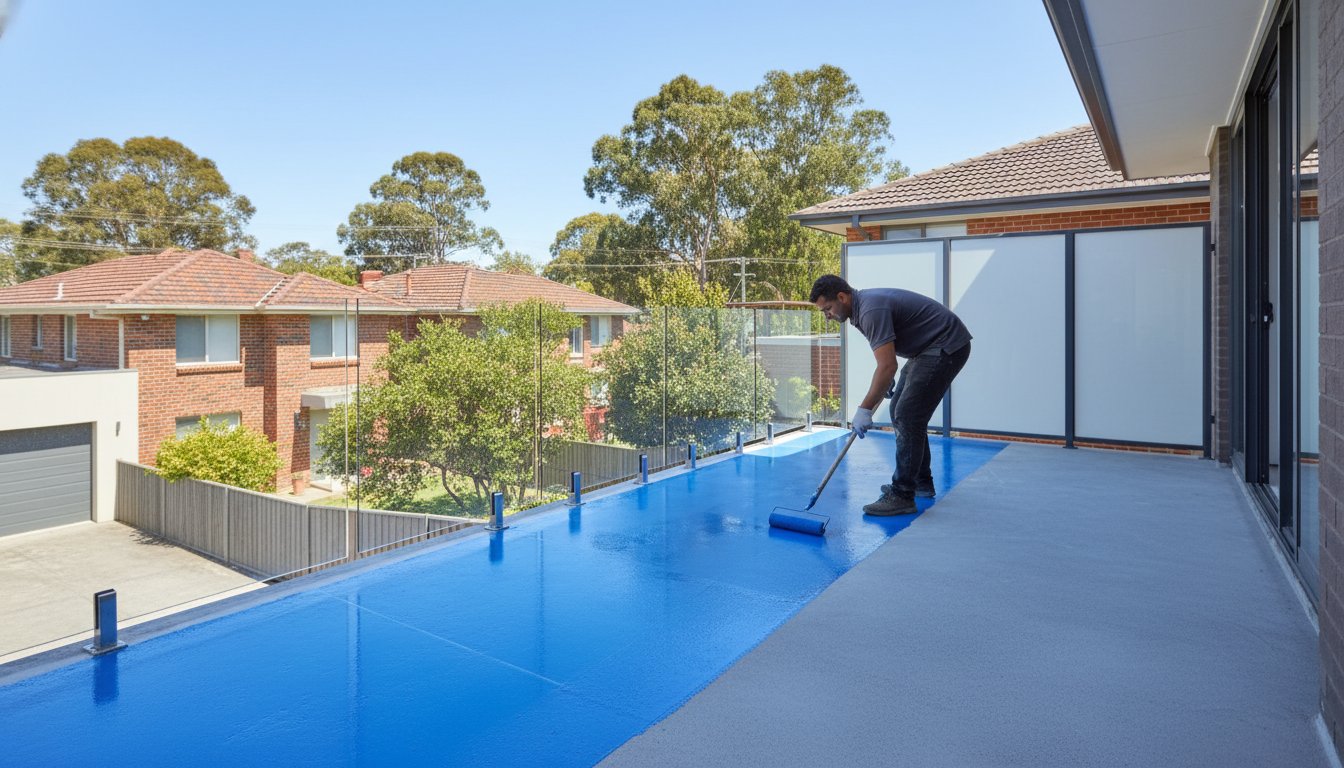
Balconies are one of the most common waterproofing failure points in Sydney apartment buildings and townhouses. They are horizontal surfaces exposed directly to rain, with no roof protection, and they typically drain through drains that can block with debris. When the membrane fails on a balcony, water can penetrate the slab and cause damage to the ceiling of the room directly below.
Balcony waterproofing also has to accommodate movement — thermal expansion and contraction cause concrete to move slightly over time, and a rigid membrane that doesn’t account for this will crack at joints and penetrations.
Rooftops and Flat Roof Areas
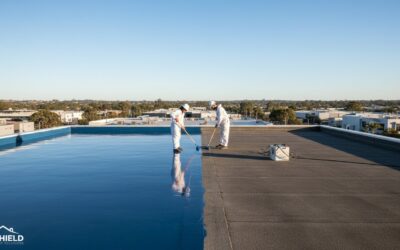
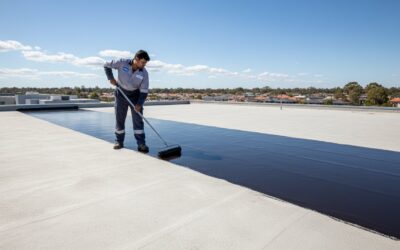
Flat or low-pitch rooftops require robust waterproofing systems, typically torch-on membranes or sheet membrane systems, because water has nowhere to go quickly. Ponding water on a compromised membrane will find its way through any weakness. In Sydney, rooftop failures are a leading cause of significant internal water damage, particularly in older residential buildings where membranes are past their serviceable life.
Kitchens, Laundries, and Planter Boxes
Wet areas beyond bathrooms are frequently overlooked. Kitchens and laundries have regular water exposure around sinks, dishwashers, and washing machine connections. Planter boxes — common in Sydney courtyard gardens and apartment balconies — hold soil that retains moisture against walls and substrate continuously. Without proper waterproofing, planter boxes are a slow but reliable source of water ingress into adjacent structures.
Pools and Ponds
Pool and pond waterproofing is a specialist area. These structures hold large volumes of water under constant hydrostatic pressure. A failed pool shell doesn’t just lose water — it can saturate the surrounding soil, undermine footings, and damage adjacent structures. Regular inspection and proactive maintenance of the waterproofing membrane is essential for any pool or pond owner.
Proactive Maintenance vs Remedial Repair: Knowing the Difference
There are two distinct modes of waterproofing work: maintenance and remediation. Understanding the difference matters because the cost, disruption, and long-term outcomes are significantly different.
Proactive maintenance includes resealing grout, replacing deteriorating caulk at junctions, reapplying sealant around fixtures, and inspecting membranes at regular intervals. This work is low-cost, minimally disruptive, and keeps your waterproofing system in serviceable condition. Most wet areas benefit from a maintenance check every 5–7 years, or sooner if you’re noticing early warning signs.
Remedial waterproofing is required when the membrane or substrate has already failed. This typically means stripping tiles, removing damaged substrate, applying a new membrane system, and re-tiling. It is significantly more expensive, more disruptive, and takes longer. Remedial work is also the only appropriate response when active water infiltration has been identified — patching over a failed membrane without removing and replacing it is a short-term fix that will fail again.
The practical lesson for homeowners: the longer you wait to address a waterproofing concern, the more likely you are to move from a maintenance job into a remedial one. Getting a professional assessment at the first sign of an issue is almost always the more cost-effective decision.
How Sydney Waterproofing Services Approaches Every Job
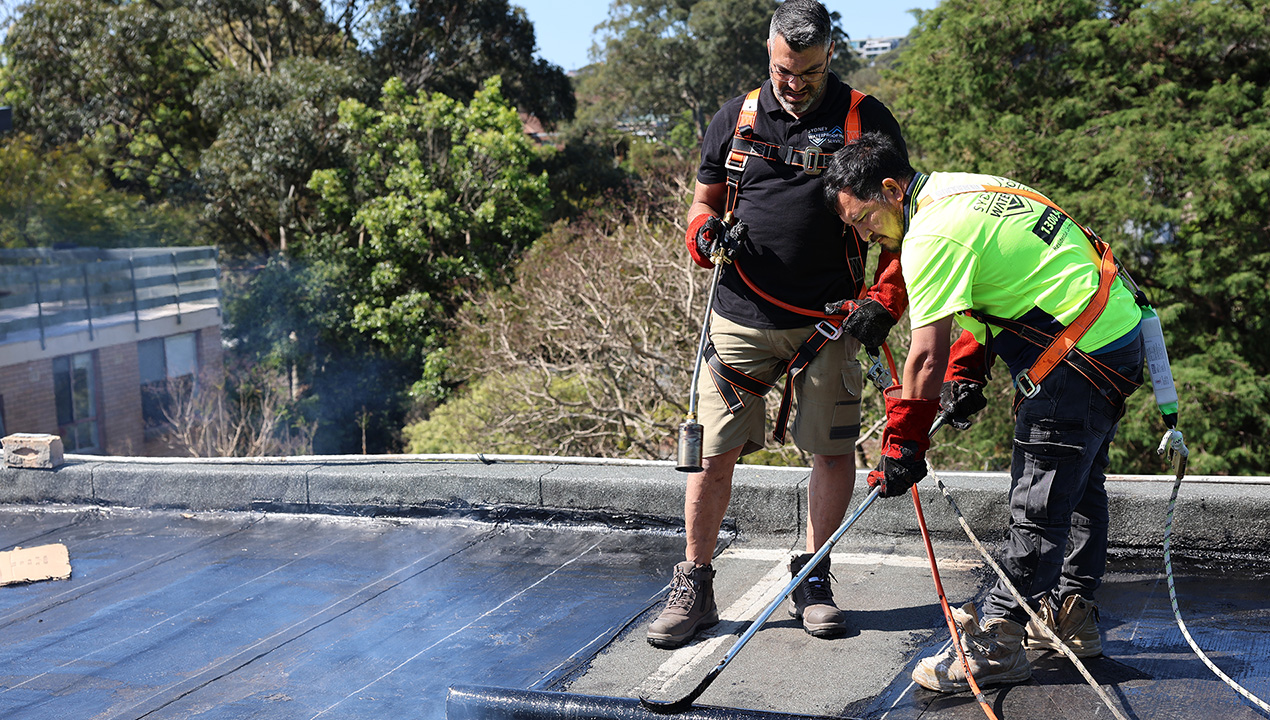
Sydney Waterproofing Services has been working on residential and commercial properties across Sydney since 2016. The team is fully qualified and covers every type of waterproofing a Sydney property might require — from bathroom and shower waterproofing to remedial membrane systems, balcony work, rooftop membranes, pool and pond waterproofing, caulking and sealing, and tiling.
Every job starts with a thorough diagnosis. Before any membrane is applied or tile is removed, the team identifies the source and extent of the problem. This matters because applying a new waterproofing layer over a compromised substrate will fail — proper preparation is what determines whether a repair holds for 10 years or 10 months.
The team works exclusively with proven, industry-grade products from trusted brands including Ardex, Gripset, Mapei, Bostik, Crommelin, Soprema, and Drizoro. Product selection is matched to the specific application — what’s appropriate for a shower recess differs from what’s required on an exposed rooftop or a below-ground retaining wall.
Work is carried out in compliance with AS 3740 (waterproofing of domestic wet areas) and relevant Australian building standards. Sydney Waterproofing Services holds membership with the Master Builders Association and the Australian Institute of Waterproofing (AIW) — both of which require members to maintain professional standards and ongoing competency.
All work comes with a workmanship guarantee, and the team provides free, no-obligation quotes for every job.
Why Sydney Homeowners Trust Sydney Waterproofing Services
Choosing a waterproofing contractor in Sydney isn’t just about price. Waterproofing is a structural layer of your property — it sits behind tiles, beneath membranes, and inside walls. A poor application you can’t see today becomes a costly failure in three years. Who you hire matters.
Sydney Waterproofing Services has built a 5-star reputation across Google reviews by consistently delivering work that holds up. The team brings the same standard to a single shower repair in Penrith as to a multi-level balcony remediation in the Eastern Suburbs.
What sets the team apart:
- Fully qualified tradespeople with extensive hands-on experience across all waterproofing types
- Full-range capability — diagnosis, repair, membrane application, tiling, and sealing all handled by the same team
- Industry memberships — Master Builders Association and AIW membership mean professional accountability
- Premium materials only — work is backed by the quality of products, not just the labour
- Transparent, competitive pricing — free quotes with no pressure and no hidden costs
- Mon–Sat availability from 7am–6pm to fit around your schedule
Whether you’re dealing with an active leak that needs urgent attention, planning a bathroom renovation and want it done right from the start, or simply getting ahead of a property that hasn’t been inspected in years — Sydney Waterproofing Services is the team Sydney homeowners call.
Request a free quote: 1300 94 9191 Or contact us online at sydwaterproofingservices.com.au
Protect Your Property Before Water Does the
Deciding
Water damage doesn’t wait for a convenient time. It works quietly, out of sight, until the problem is impossible to ignore — and by then, the repair bill reflects months of unchecked infiltration. The good news is that most serious waterproofing failures are preventable with timely inspection and proper maintenance.
If you’ve seen any of the warning signs covered in this guide, or if it’s simply been a while since your wet areas were professionally assessed, the smartest move is to get eyes on it now. A quick inspection costs nothing with Sydney Waterproofing Services, and the information you get from it is worth far more than the alternative.
Book your free waterproofing assessment today →
Frequently Asked Questions
What is waterproofing and why does it matter for Sydney homes?
Waterproofing is the application of a protective membrane or sealant system that prevents water from penetrating a building’s structure. In Sydney, it matters because the local climate — high rainfall, coastal humidity, and temperature variation — accelerates the failure of unprotected surfaces. Without adequate waterproofing, water infiltrates walls, floors, and ceilings, causing mould, structural damage, and costly remedial repairs.
How do I know if my bathroom needs to be resealed or fully waterproofed?
If your grout is crumbling, tiles are sounding hollow, or there’s a damp smell that doesn’t clear after ventilation, the waterproofing membrane beneath your tiles may have failed. Resealing is a surface-level fix appropriate for minor caulk or grout deterioration. Full membrane replacement is required when water has already penetrated the substrate. A professional assessment will tell you which applies to your situation.
How long does waterproofing last in a Sydney bathroom?
A properly installed waterproofing membrane in a bathroom should last 10 years or more, provided the grout and sealant joints are maintained. Grout can begin to deteriorate in as little as 5–7 years depending on cleaning products used and frequency of use. Regular maintenance of surface-level joints extends the life of the membrane beneath considerably.
What is remedial waterproofing and when is it needed?
Remedial waterproofing addresses waterproofing failures that have already occurred — typically involving the removal of existing tiles and substrate, application of a new membrane, and reinstatement of the surface. It is needed when active water infiltration is present, when structural damage has resulted from ongoing leaks, or when a property is being renovated and the existing system doesn’t meet current standards.
Do I need to waterproof my balcony in Sydney?
Yes. Balconies are exposed horizontal surfaces that collect rainwater directly and are subject to thermal movement over time. Without a continuous, flexible membrane system properly installed at all junctions and penetrations, water will eventually find a path through the slab. This is one of the most common causes of ceiling damage and internal water ingress in Sydney apartments and townhouses.
Does Sydney Waterproofing Services provide a warranty?
Yes. Sydney Waterproofing Services provides a workmanship guarantee on all completed work. The specific terms are confirmed at the time of quotation and vary depending on the scope and system applied. The team also only uses materials from established industry brands, which carry their own product warranties.
How much does waterproofing cost in Sydney?
Waterproofing costs vary based on the area being treated, the extent of any existing damage, the system required, and site access. A shower recess requiring membrane replacement will cost considerably less than a full balcony remediation or rooftop membrane system. Sydney Waterproofing Services provides free, no-obligation quotes so you know the exact scope and cost before any work begins. Call 1300 94 9191 to arrange an assessment.
Which areas of my home should I get inspected first?
If you’ve never had a professional waterproofing inspection, prioritise your shower recesses and bathrooms, followed by any balconies or flat rooftop areas. These are the highest-risk zones in most Sydney properties and the most common sources of costly damage. Kitchens, laundries, and planter boxes should also be assessed if they are more than 10 years old or haven’t been inspected since construction.